
Semafor’s ‘The Next 3 Billion’ Brings Global Leaders Together During UNGA Week
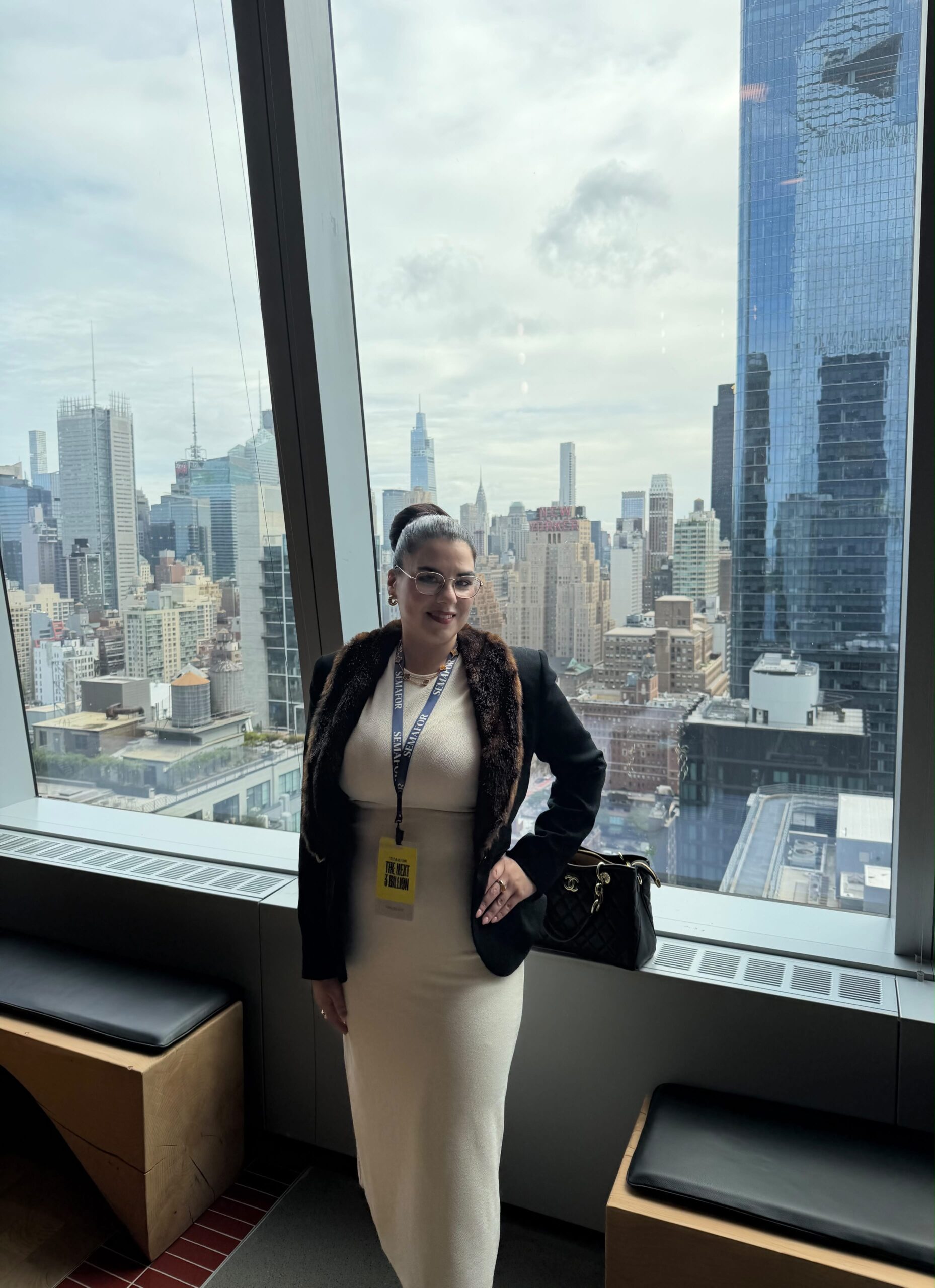
New York- Paula Sweis- From UN
NEW YORK — Global leaders from government, business, technology, finance and international development gathered in New York on September 22 for Semafor’s The Next 3 Billion, a high-level forum examining how digital connectivity, artificial intelligence, finance and investment can expand economic opportunity across emerging markets.
Held at Convene at 30 Hudson Yards during the 81st session of the United Nations General Assembly, the gathering took place as political leaders, executives, investors and international organizations converged across New York for a week of discussions extending far beyond the formal meetings at United Nations Headquarters.
The premise behind The Next 3 Billion is significant: approximately three billion people around the world remain offline, limiting access not only to digital services but also to education, healthcare, financial systems and economic opportunities increasingly dependent on connectivity.
Semafor organized the event around a larger question: as artificial intelligence and other technologies reshape the global economy, how can the next stage of growth expand opportunity in developing and emerging economies rather than deepen existing divides?
Infrastructure Before Innovation
One of the recurring themes throughout the program was that discussions about artificial intelligence and digital transformation ultimately depend on something more fundamental — infrastructure.
The event examined the future of funding African infrastructure, bringing together Diana Layfield, Chair of British International Investment; Patrick Muyaya, Minister of Communications of the Democratic Republic of the Congo; and Derick De Zilva, CEO of Standard New York, in a discussion moderated by Semafor Africa Editor Yinka Adegoke.
The conversation reflected a challenge facing many emerging economies. The economic potential of AI, fintech and digital services depends on reliable electricity, telecommunications networks, data infrastructure and access to capital capable of financing those systems.
The relationship between connectivity and investment therefore became an important part of the broader discussion.
Executives from Cisco, Schneider Electric and Standard Bank also participated in the program, bringing private-sector perspectives on technology, energy, investment and Africa’s economic development.
AI and the Global Development Divide
Artificial intelligence occupied a significant place in the day’s discussions.
A session on the future of AI included Josh Parker, Head of Sustainability at NVIDIA, and Sasha Rubel, AWS Head of AI Policy for Europe, the Middle East and Africa, while another brought together Sangbu Kim, Vice President for Digital at the World Bank; Bosun Tijani, Nigeria’s Minister of Communications and Digital Economy; and Josephine Teo, Singapore’s Minister for Digital Development and Information.
Their inclusion reflected how quickly AI has moved from a technology-sector issue into a broader development question.
Countries that lack sufficient digital infrastructure, reliable energy or locally relevant data risk participating unevenly in the AI economy. At the same time, technology could provide new ways to expand healthcare, education, financial services and access to information if the infrastructure and investment needed to deploy it are available.
The Gates Foundation, which supported The Next 3 Billion series, announced a commitment of at least $1 billion globally over two years toward AI development, with areas of focus including education, health, agriculture and making AI work across more languages and local contexts.
For African economies in particular, the question is not simply whether AI will arrive, but whether countries will have sufficient infrastructure, data, skills and investment to participate in building and shaping the technology.
Finance, Fintech and Economic Inclusion
Financial inclusion was another major component of the program.
Cristina Junqueira, co-founder and Chief Growth Officer of Nubank, participated in a discussion on the future of fintech, while Shola Akinlade, co-founder and CEO of Paystack, and Jesse Moore, CEO of M-Kopa, discussed the relationship between payments and economic growth.
Digital payments and mobile financial services have become particularly important in markets where traditional banking infrastructure has not reached large portions of the population.
Connecting more people to the digital economy therefore involves more than internet access. It also requires financial infrastructure that allows individuals and small businesses to save, borrow, receive payments, build businesses and participate more fully in domestic and international markets.
That connection between technology and finance made The Next 3 Billion especially relevant during UNGA week, when discussions across New York increasingly focused on how private investment can complement governments and international institutions in addressing development challenges.
Energy, Climate and Emerging Markets
The forum also examined the relationship between development and the global energy transition.
Former Colombian President Iván Duque participated in a discussion on emerging markets and the energy transition, while another session brought together Patrick Walsh, CEO of Sun King; Carol Koech, Vice President for Africa at the Global Energy Alliance; and Jacqueline Novogratz, CEO of Acumen, to discuss the role of solar energy.
Energy access remains closely connected to digital development. Expanding telecommunications networks, data centers, digital financial services and AI infrastructure requires reliable electricity, making energy investment part of the same broader economic-development equation.
The forum also addressed the role of philanthropy and international aid. Participants included Idris Elba, representing the Elba Hope Foundation, and David Miliband, President and CEO of the International Rescue Committee. Mark Suzman, CEO of the Gates Foundation, discussed innovation and the next generation.
Global Institutions and the Next Stage of Growth
The program also brought the conversation directly into the international-policy sphere.
Ngozi Okonjo-Iweala, Director-General of the World Trade Organization, participated in a discussion on globalization and trade, while Queen Máxima of the Netherlands, in her capacity as the United Nations Secretary-General’s Special Advocate for Financial Health, discussed forces influencing economic growth and financial health.
The presence of government officials, international institutions, business executives and development leaders demonstrated why events surrounding the General Assembly have become an important extension of UNGA itself.
Formal diplomacy takes place inside United Nations Headquarters, but many of the conversations about financing, technology and implementation occur throughout New York, where governments meet directly with investors, corporations, foundations and civil society.
The Next 3 Billion reflected that intersection.
Its discussions connected digital access with infrastructure, infrastructure with investment, investment with economic opportunity, and technological innovation with the broader question of who participates in the next phase of global growth.
As artificial intelligence and digital technologies accelerate, connecting the billions of people who remain outside the digital economy is becoming more than a development objective. It is increasingly a question of where future economic growth will occur, who will finance it and who will ultimately benefit from it.