
Bangladesh Hosts High-Level First Spouses Dialogue on Women’s and Children’s Wellbeing During UNGA 81
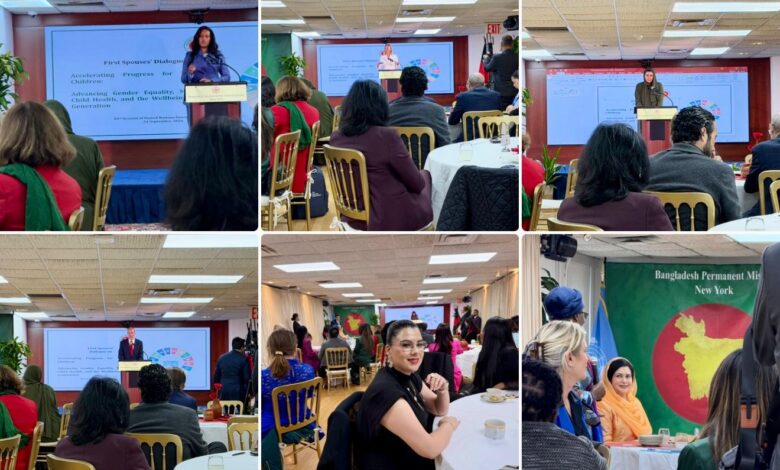
New York – Paula Sweies – From UN
NEW YORK — A high-level dialogue hosted by Bangladesh brought together first spouses and international representatives in New York on September 24 to discuss advancing gender equality, strengthening maternal and child healthcare, and improving opportunities for future generations.
The private gathering, titled “First Spouses Dialogue on Accelerating Progress for Women and Children: Advancing Gender Equality, Maternal and Child Health, and the Wellbeing of the Next Generation,” took place at the Permanent Mission of Bangladesh to the United Nations during the 81st session of the UN General Assembly.
Hosted by Dr. Zubaida Rahman, spouse of Bangladesh Prime Minister Tarique Rahman, the event was designed to provide a setting for exchanging national experiences and exploring how public leadership can help advance priorities affecting women, children, and families.
With only four years remaining until the 2030 deadline for the United Nations Sustainable Development Goals, the gathering placed particular emphasis on turning international commitments into practical policies and sustained cooperation.
Advancing Gender Equality Through Family and Economic Support
A central theme of the dialogue was the relationship between women’s empowerment, family wellbeing, and economic opportunity.
The discussion highlighted the importance of ensuring that women have a meaningful voice in decisions affecting their healthcare, education, employment, and livelihoods.
Access to affordable childcare, supportive workplaces, and better maternal healthcare were among the practical measures considered essential to helping women balance professional responsibilities with family life.
The conversation also addressed the importance of recognizing caregiving as a shared responsibility, including the role of fathers in supporting children and family wellbeing.
These issues extend beyond individual households. When women have greater access to healthcare, education, and economic opportunities, the benefits can contribute to stronger communities and more inclusive national development.
The dialogue underscored the need for policies that recognize the different circumstances facing families while allowing women to pursue their ambitions without sacrificing their health or financial independence.
Maternal and Child Health Remain Global Priorities
Another major focus was reducing preventable maternal and newborn deaths through stronger healthcare systems and greater investment in basic medical services.
The discussion drew attention to the continuing risks associated with childbirth complications, premature births, and inadequate access to essential care.
Primary healthcare was presented as a foundation for improving survival and wellbeing, particularly through antenatal and newborn services, immunization, family planning, and treatment for common childhood illnesses.
The importance of nutrition was also emphasized as a critical part of maternal health, children’s development, and long-term wellbeing.
These priorities are especially significant for communities where healthcare facilities, trained medical professionals, and preventive services remain difficult to access.
The forum also considered maternal mental health and the importance of supporting women beyond pregnancy and childbirth.
Together, these issues reflected a broader understanding of healthcare—one that recognizes the connections between physical health, mental wellbeing, family support, and economic security.
The Role of First Spouses in International Cooperation
The gathering also explored how first spouses can use their public platforms to support initiatives addressing challenges facing women and children.
Although the responsibilities of first ladies, first gentlemen, and royal spouses differ across countries, their public roles can create opportunities to encourage partnerships, raise awareness, and sustain attention to important social priorities.
The invitation to the dialogue acknowledged these differences and emphasized respect for each country’s constitutional, political, and cultural arrangements.
Rather than assuming a common mandate, the event sought to encourage cooperation based on shared development goals and the ability of public leadership to connect institutions with communities.
The discussion also highlighted the importance of maintaining support for programs over time, recognizing that improvements in education, healthcare, and family wellbeing require sustained investment and implementation.
The meeting was conducted under the Chatham House Rule, allowing the substance of the exchange to be reported without attributing remarks to individual participants.
From International Commitments to Meaningful Action
The First Spouses Dialogue reflected a broader theme of UNGA 81: the need to translate international development commitments into results that improve people’s daily lives.
Gender equality, access to healthcare, child development, and family wellbeing remain closely connected to the United Nations’ 2030 Agenda for Sustainable Development.
While international agreements establish shared objectives, their effectiveness ultimately depends on national policies, accessible services, sufficient resources, and cooperation among governments and communities.
The September 24 gathering provided an opportunity to consider how advocacy and international partnerships can support these efforts, particularly in areas where progress remains uneven.
At a time when countries face continuing challenges related to women’s rights, healthcare access, and economic inequality, the dialogue emphasized the importance of investing in both women and the next generation.
The meeting at Bangladesh’s Permanent Mission demonstrated how diplomatic engagement can extend beyond formal negotiations to address social priorities that directly affect families and communities.
As the international community approaches the 2030 Sustainable Development Goals deadline, the discussion reinforced the importance of sustained leadership, stronger institutions, and practical cooperation in advancing a healthier and more equitable future for women and children.