
Lebanon Eyes Regional Trade Revival Through Port Expansion, Syrian Rail Link and Foreign Investment
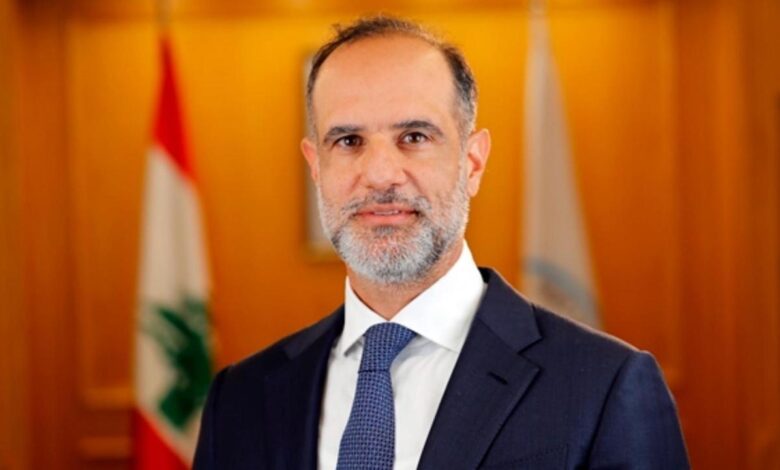
photo: U.S. Embassy Beirut / Wikimedia Commons
New York- Paula Sweis-From UN
Lebanon is looking to rebuild its position as a regional transportation and trade hub through ambitious plans to modernize its ports, expand airport operations, and develop new infrastructure connections with neighboring countries.
Speaking Monday during a virtual discussion hosted by the Washington-based Center for Strategic and International Studies (CSIS), Lebanon’s Minister of Public Works and Transport, Fayez Rasamny, outlined the government’s efforts to restore economic activity following years of financial instability, political uncertainty, and regional conflict.
The discussion, titled *Rebuilding Regional Connectivity*, examined how investments in transportation infrastructure could strengthen Lebanon’s economy and create new opportunities for trade with Syria, Iraq, Gulf countries, and European markets.
Rasamny emphasized that Lebanon has significant economic potential but requires stronger institutions, improved regional relationships, and substantial investment to achieve its infrastructure ambitions.
Expanding Lebanon’s Ports to Strengthen Regional Trade
One of the government’s major priorities is increasing the capacity of Beirut and Tripoli’s ports, which Rasamny described as important gateways for future regional commerce.
According to the minister, Beirut’s port currently has capacity for approximately 1.2 million containers, with plans to expand that figure to 3 million.
In Tripoli, the government hopes to increase capacity from approximately 250,000 containers to 1.2 million.
The proposed expansions would significantly strengthen Lebanon’s ability to handle international cargo and serve as an alternative shipping route for neighboring countries.
However, the minister acknowledged that improvements in port infrastructure must be accompanied by reforms in customs procedures, security coordination, and administrative efficiency.
He discussed efforts to simplify the responsibilities of the different security and customs agencies operating at Lebanon’s ports, with the aim of improving cargo processing times and encouraging international investment.
A New Railway Connection Between Lebanon and Syria
Another important proposal involves connecting the Port of Tripoli to Syria’s existing railway network.
Rasamny revealed that feasibility studies are being conducted to assess the possibility of establishing a rail connection between northern Lebanon and Syria.
The proposed project could allow goods arriving at Lebanese ports to travel inland through Syria and potentially reach additional markets across the region.
The minister explained that Lebanon’s geographic location provides an opportunity to serve as a connection between Mediterranean shipping routes and neighboring economies.
He also discussed possible transportation and energy links involving Iraq, Syria, and Lebanon, including infrastructure that could support the movement of oil, gas, and commercial goods.
These ideas remain dependent on financing, technical studies, and cooperation among the countries involved.
For Lebanon, stronger connections with Syria could represent an opportunity to increase transit activity and generate additional revenue from its transportation infrastructure.
Northern Lebanon Airport Plans Move Forward
The minister also addressed plans to develop Qlayaat Airport, officially known as René Mouawad Airport, in northern Lebanon.
The government hopes the airport will serve as a second aviation gateway, providing alternatives to Beirut’s Rafic Hariri International Airport.
Rasamny discussed plans to attract low-cost airlines and establish flights to destinations not currently served directly from Beirut.
He also emphasized the airport’s potential to support cargo operations, e-commerce, and economic activity in northern Lebanon.
Its location could eventually allow the facility to serve travelers from neighboring areas of Syria, provided border procedures and necessary agreements are established.
Although preparations for an initial flight have advanced, Rasamny acknowledged that certification and regulatory requirements must be completed before regular commercial operations can proceed.
The minister also discussed the possibility of restoring direct flights between Lebanon and the United States.
He explained that additional regulatory work and international aviation assessments would be required, estimating that the process could take at least another year.
Foreign Investors Express Interest in Lebanon’s Infrastructure
Attracting international investment remains central to the government’s plans.
During the discussion, Rasamny said several Gulf countries and international companies had expressed interest in participating in Lebanon’s transportation and infrastructure projects.
Potential areas of cooperation include port development, airport operations, customs modernization, and digital infrastructure.
He also reported receiving an expression of interest from an international company proposing an investment exceeding $1 billion in Lebanese port infrastructure.
However, the minister did not identify the company or announce a finalized investment agreement during the discussion.
Rasamny described public-private partnerships and government-to-government arrangements as possible ways to finance major projects, while acknowledging that Lebanon’s regulatory processes and bureaucracy remain obstacles to implementation.
He also referred to cooperation with the International Finance Corporation, a member of the World Bank Group, concerning private-sector participation in airport operations.
For Lebanon, securing investment will depend not only on international interest but also on the government’s ability to establish a reliable legal, financial, and regulatory environment.
Rebuilding Infrastructure in Southern Lebanon
Beyond regional transportation projects, Rasamny addressed the challenge of reconstructing infrastructure damaged by conflict in southern Lebanon.
He explained that damaged bridges and roads have disrupted transportation between communities, creating additional difficulties for residents and businesses.
The Ministry of Public Works and Transport has supported temporary repairs and alternative connections while longer-term reconstruction planning continues through the Council for Development and Reconstruction.
The minister acknowledged that major rebuilding efforts require significantly greater financial resources than those currently available.
He also expressed concern about investing in infrastructure that could face renewed damage if security conditions deteriorate.
The challenge highlights the close relationship between Lebanon’s economic recovery and the broader regional security environment.
Without sustained stability, ambitious construction projects could face delays, higher costs, and continued investment uncertainty.
Lebanon’s Place in Emerging International Trade Corridors
The discussion also explored Lebanon’s potential role in wider international transportation networks connecting the Middle East, Europe, and Asia.
Rasamny referred to efforts to prepare Lebanon for possible participation in emerging regional trade corridors, including discussions related to the India-Middle East-Europe Economic Corridor.
He emphasized that future connectivity could extend beyond traditional transportation infrastructure to include energy pipelines, digital networks, and international cargo routes.
Lebanon’s strategic position on the Mediterranean gives it an opportunity to participate in these developments, but realizing that potential will require modernization and stronger cooperation with regional partners.
Economic Recovery Depends on Implementation
Despite outlining an ambitious infrastructure strategy, Rasamny acknowledged that government capacity, financing constraints, and political uncertainty continue to complicate Lebanon’s recovery.
He described the difficulties of managing a ministry affected by years of institutional weaknesses and limited staffing, while attempting to introduce reforms and improve public services.
The minister also stressed the importance of strengthening Lebanese state institutions and supporting the national army as part of the country’s broader efforts to restore security and government authority.
The discussion, moderated by CSIS senior associate Paul Salem, highlighted both the opportunities facing Lebanon and the challenges that could prevent those opportunities from becoming reality.
For a country that has experienced years of economic difficulties and regional instability, rebuilding transportation infrastructure could provide an important foundation for long-term recovery.
However, the success of these projects will depend on securing investment, improving institutional performance, maintaining regional cooperation, and establishing greater political and security stability.
As Lebanon seeks to reconnect with its neighbors and international markets, the question is no longer simply whether the country has the geographic advantage to become a regional trade hub, but whether it can mobilize the financial resources and political commitment needed to turn that ambition into reality.


